
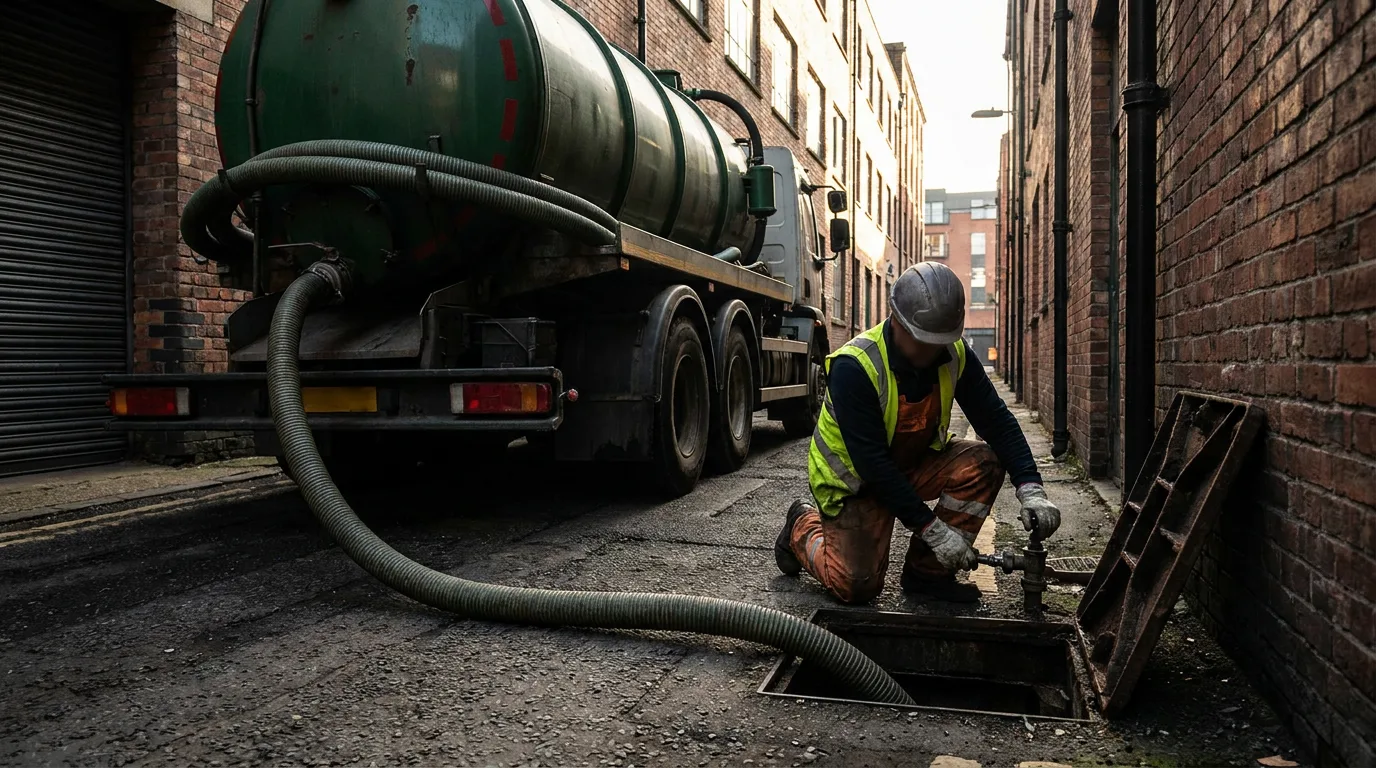
How Often Does A Septic Tank Need Cleaning?
Most homes on septic pump out every 3 to 5 years, and that range comes straight from tank size measured against how many people live in the house. A single-person household stretches toward the 5 year mark, similar to the light-use pattern you'd plan around with porta potty rental per day for a small job. A family of five with a smaller tank pushes toward 3 years, sometimes sooner if there's heavy laundry use or a garbage disposal running daily. Jersey City has plenty of older properties where the original tank size was never matched to a growing household, so the interval shrinks. If you're not sure which end of that range you're on, septic tank pumping cost breaks down what a service call runs and how tank size affects the number. Grease adds a separate wrinkle: a grease interceptor gets pumped once fats, oils, grease and solids hit 25 percent of the liquid depth, which is a different clock than a residential tank runs on. Restaurants and commercial kitchens in Jersey City should check grease trap pumping rather than guess from a home schedule, and many of the same kitchens also rely on handwashing station rental to keep staff compliant.
What Happens If You Wait Too Long Between Pumpings?
Solids build up past the point a normal pump-out can fully clear, and the drain field starts taking the overflow. That's when you get slow drains, gurgling pipes, or standing water near the tank. Waiting is the single most common reason a homeowner ends up calling for emergency septic service instead of a scheduled visit. The warning signs are worth learning before they show up on your lawn, much like knowing how many porta potties do i need before a crew shows up short. Septic tank warning signs covers what to watch for between pumpings, and catching it early is cheaper every time. A tank that's badly overdue also risks damage to the drain field itself, which costs far more to replace than a pump-out ever does. If your property backs onto a shared line or an older setup common in parts of Jersey City, get it checked rather than wait for a backup to tell you, and if the yard needs temporary containment during the dig, temporary fence rental keeps the area secured.

Why Does Household Size Change The Pumping Schedule?
More people means more water in, more solids in, and a faster fill on the same size tank. A 1,000 gallon tank serving two people behaves nothing like the same tank serving six. Laundry frequency, garbage disposal use, and even how often the dishwasher runs all shift the math. That's why the 3 to 5 year range is a starting point, not a fixed date on your calendar, the same way porta potty rental cost is a range shaped by usage rather than a flat number. If you're renovating a home in Jersey City and adding bedrooms or bathrooms, the septic load changes with it, and home renovation porta potty rentals can cover the crew while the system gets reassessed. Same goes for additions that bring in more permanent residents, and a project that size often needs a storage container rental on site for tools and materials. A pumping company that's serviced the tank before is your best source for a realistic interval, since they've seen the sludge layer firsthand and know if it's building faster than expected.
When Should You Schedule The Next Pump-Out?
Book it before the 5 year mark if you've never had it inspected, and sooner if you've noticed slow drains or a wet patch over the drain field. Waiting for a visible problem means you're already past the point of easy prevention, the same logic that applies to booking event restroom rental well ahead of a date rather than the week of. How often to pump a septic tank is worth revisiting annually if your household size changes, since a new baby, a roommate, or an aging parent moving in all shift the schedule. For the pumping visit itself, septic pumping service covers what a standard call includes, and septic tank cleaning goes into what gets cleaned versus what gets pumped. If you're dealing with a holding tank setup instead of a full septic system, holding tank rental has separate pumping needs entirely, usually driven by usage volume rather than a multi-year clock, and a site with both a tank and a crew often adds a standard porta potty rental or an ADA accessible porta potty for the duration of the work.
Septic Pumping Price Reference
| service | duration | low | typical | high |
|---|---|---|---|---|
| septic pumping | day | 150 | 250 | 300 |
| septic pumping | weekend | 50 | 100 | 150 |
Weekend pumping calls run lower than a standard weekday visit in this dataset, which is worth knowing if you're scheduling around a work week, similar to how a restroom trailer rental or dumpster rental cost can shift depending on the day booked. For anything tied to a construction project rather than a home, construction site services covers the fuller list of what a site needs beyond just the tank, and OSHA portable toilet requirements is worth a read if the crew count is climbing.
How do I know my tank size?
Check your property records or the original installation permit, since tank size is usually documented at install. If you can't find it, a pumping technician can estimate it from the access lid dimensions during the first visit. Most Jersey City homes run 1,000 to 1,500 gallon tanks, and the septic tank pumping cost page breaks down how tank size factors into the bill.
Does household size really change the interval that much?
Yes. A 1,000 gallon tank serving two people can stretch past 5 years, while the same tank serving six people may need pumping closer to every 3 years. Water use and solids load both scale with occupancy, not just tank volume.
What's the difference between septic pumping and septic cleaning?
Pumping removes liquid and settled solids from the tank. Cleaning can include agitating the sludge layer so more gets pulled out, which some pump-outs skip. Ask which service you're booking, since a thorough cleaning takes longer than a quick pump.
Can I extend the interval by using less water?
Somewhat. Spreading out laundry loads and avoiding a garbage disposal helps slow the fill rate, but it won't double your interval. Tank size and household size still drive the schedule more than water-saving habits do.
Is a grease trap on the same schedule as a home septic tank?
No. A grease interceptor gets pumped once fats, oils, grease and solids reach 25 percent of the liquid depth, which can happen far more often than a 3 to 5 year residential cycle, especially in a busy kitchen.
Next step
Get a delivery date
Tell us the address, the dates and the headcount. We size the order and confirm the route.