How many restrooms does a farm crew need?
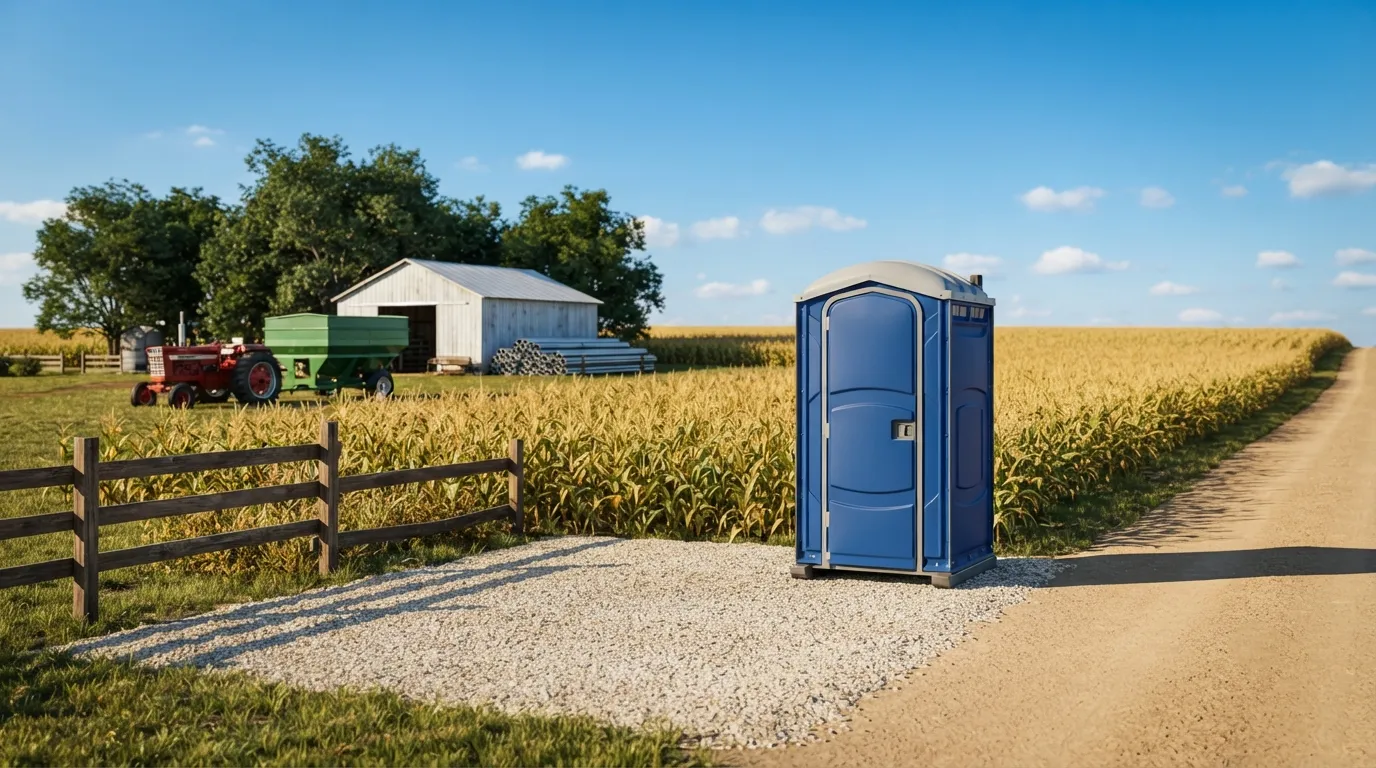
OSHA 1928.110 sets the number for agricultural operations: one toilet and handwashing facility per 20 workers doing hand labor, and it has to sit within a quarter mile of where people are working. That is stricter on distance than most construction rules, because farm crews spread out across open ground instead of clustering around one job site. If you are running a market garden inside Jersey City proper, or a seasonal operation with a crew that rotates between beds, the math is simple: count heads, divide by 20, round up. A five-person crew still needs a unit within that quarter-mile radius even though the ratio math says less than one. Most of our farm and garden customers land on one standard porta potty rental per field zone rather than one central bank of units, because walking a quarter mile each way eats labor time. We place units at the edge of planting rows so equipment can still move, and we can add a handwashing station rental alongside for the same visit. Potable water counts too. OSHA 1926.51(a)(1) requires an adequate supply of potable water at any place of employment, and that pairs naturally with the handwash setup rather than standing alone. If your operation is small and seasonal, check the porta potty rental cost page before you commit to a full season, since short runs price differently than a multi-month lease.
What does a standard unit cost for a farm season?
A standard portable toilet runs on a day, week or month basis, and farm operations usually land on the month rate since crews work a full growing season, not a weekend. Here is what a single standard unit costs across the durations we quote most:
| Duration | Low | Typical | High |
|---|---|---|---|
| Day | $100 | $150 | $350 |
| Week | $130 | $200 | $500 |
| Month | $125 | $200 | $325 |
A standard unit holds a 60 to 70 gallon tank and stands about 92 inches tall, with a footprint close to 44 by 48 inches on the ground, so it fits at a field edge without blocking a tractor path. Service follows the ANSI/PSAI Z4.3 baseline of one visit a week for up to 10 users across a 40 hour week, though a full crew working six days will need a tighter interval. If your farm sits near a packing shed or a wash station, ask about a portable sink rental instead of a standalone handwash unit, since it handles produce rinsing and hand cleaning in one setup. Farms running through the fall need to think ahead too. Check porta potty in winter if your season runs past the first freeze, because tank servicing changes once temperatures drop. For longer commitments, the monthly porta potty rental page breaks down what changes when you lock in a season instead of paying by the week.
Do farm workers need handwashing separate from toilets?
Yes, when the work involves pesticide, herbicide or fertilizer applications. OSHA 1926.51(f)(1) requires washing facilities specifically where employees apply paints, coatings, herbicides or insecticides, or work around other harmful contaminants, and that covers plenty of standard farm tasks. A crew spraying rows needs a rinse station at the field edge, not just a toilet down the road. Separately, 29 CFR 1910.141(d)2) requires soap and a towel or hand-drying device wherever washing facilities exist; hand sanitizer alone does not satisfy that requirement, so a sanitizer stand is not a substitute if your crew handles chemicals. We pair a hand sanitizer station rental with produce work and general field traffic, but for chemical handling we set up a real portable sink rental with running water and soap. If you are unsure which rule applies to your operation, the handwashing requirements page walks through both standards side by side. Jersey City farms working close to residential lots should also plan unit placement carefully; our porta potty placement guide covers setback distances and access paths that keep a delivery truck from crossing planted beds.
Jersey City operations that need septic support for a wash house or seasonal residence should look at septic pumping service, since a typical residential tank gets pumped every 3 to 5 years depending on tank size and household load. Farms running a grease trap for a farm-to-table kitchen or stand should check grease trap pumping instead, since that schedule runs on the 25 percent fats-oils-grease depth threshold, not a calendar interval. For crews needing an accessible unit on-site, ADA accessible porta potty options meet the ADA Standards 213.2 clustering rule.
How far in advance should I book for planting or harvest season?
Two to three weeks works for most standard orders, longer if you need multiple units delivered the same day as neighboring farms in Kearny or Secaucus, both roughly 6.2 miles from Jersey City. Peak harvest weeks fill delivery schedules fast, so book early.
Can I rent just one unit for a small garden plot?
Yes. A single standard porta potty rental covers most community garden plots and small crews. Check how many porta potties do i need if your plot has multiple crews on rotating shifts.
What if my farm doesn't have road access for delivery?
Tell us during booking. Our trucks need clear approach room, and tight or unpaved access may require a different drop point. Call ahead so we can plan the route before the delivery day.
Do I need a permit to place a unit on farmland in Jersey City?
Placement on private agricultural land usually does not need a right-of-way permit, but confirm with the city if any part of the site touches a public road or sidewalk. See porta potty permit requirements for details.
Can the same rental include water for hand washing?
Yes. We pair a handwashing station rental with any toilet order, and OSHA 1926.51(a)(1) requires potable water at any place of employment regardless of farm size.
Next step
Get a delivery date
Tell us the address, the dates and the headcount. We size the order and confirm the route.