
How Do Porta Potties Work?
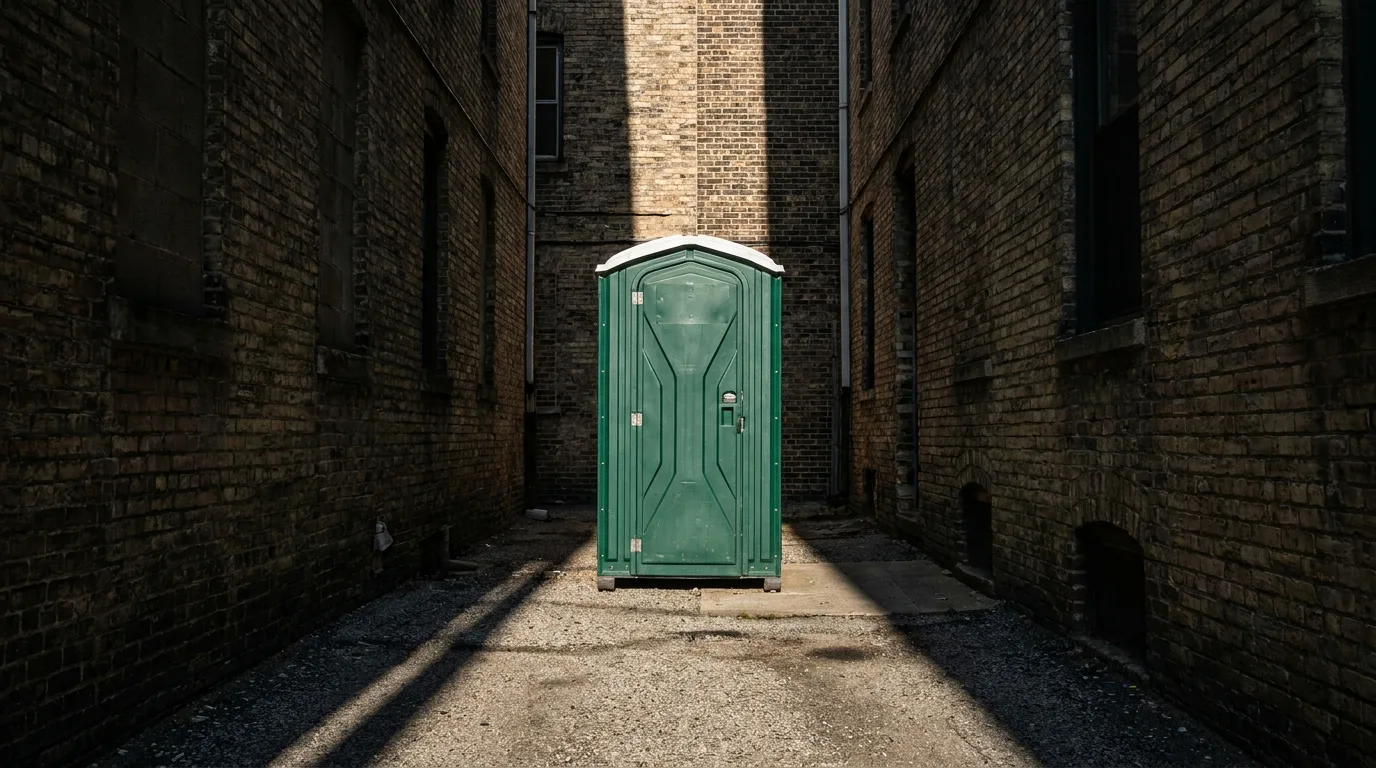
There's no plumbing involved, and that's the whole point. A standard porta potty rental sits on a molded base with a holding tank underneath, roughly 44 by 48 inches on the ground and about 92 inches tall. Waste drops into the tank, where a blue chemical deodorizer breaks down solids and knocks back odor between service visits. There's a toilet paper holder, a vent stack for airflow, and a door latch that shows occupied or vacant from outside. No water goes in, no water comes out. That's why these units work in parking lots, half-built condos along the waterfront, and anywhere a Jersey City job site doesn't have utilities run yet. For a construction crew, the routine is simple: a construction worker running to a porta-potty between pours doesn't need to hunt for a hookup or flip a valve. The unit is just there, ready, every time. Servicing follows the ANSI/PSAI Z4.3 baseline interval of one visit per week for up to 10 users across a 40 hour week, though busier sites need more frequent pumping. If you're pricing this out, the porta potty rental cost page breaks down what affects the rate.
How Do Flushable Porta Potties Work?
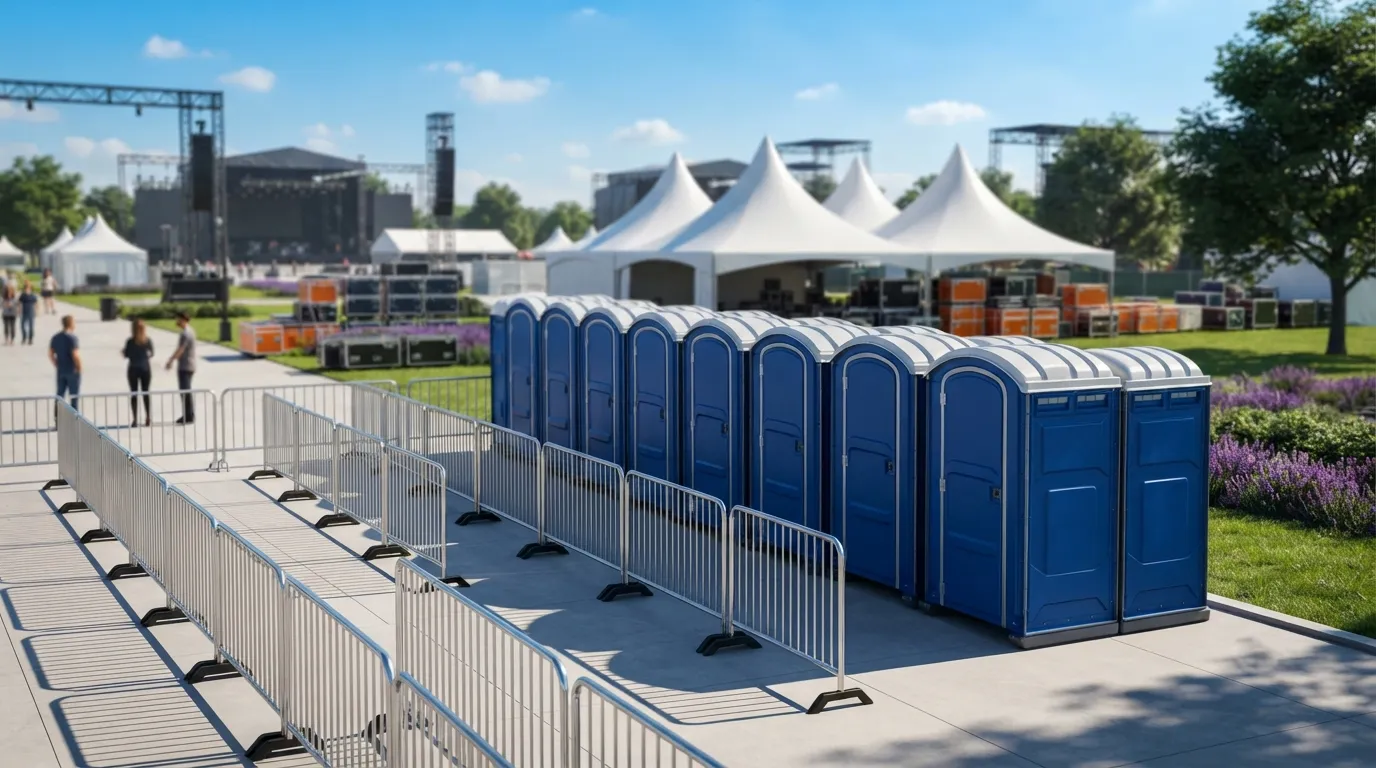
A deluxe flushable porta potty adds a small fresh water tank and a foot pump or pedal that pushes a rinse of water through the bowl after each use, similar to a camp toilet. It still drains into the same style of holding tank underneath, just with a flush cycle layered on top for comfort. These units run higher than a standard rental because of the added plumbing and interior finish, and they're the right call for weddings or office events where guests expect something closer to a real bathroom. If you're weighing options for an event, check the wedding restroom rental or event restroom rental pages for guidance on unit mix. An ADA accessible porta potty works on the same no-hookup principle but with a wider door and interior turning space. ADA Standards section 404.2.3 sets minimum clear door opening width at 32 inches, and section 304.3.1 calls for a 60 inch turning circle inside accessible units. Where several single-user units are grouped together, ADA Standards section 213.2 requires at least 5 percent to be accessible, with a minimum of one no matter how small the cluster.
How Does a Portable Sink Work?
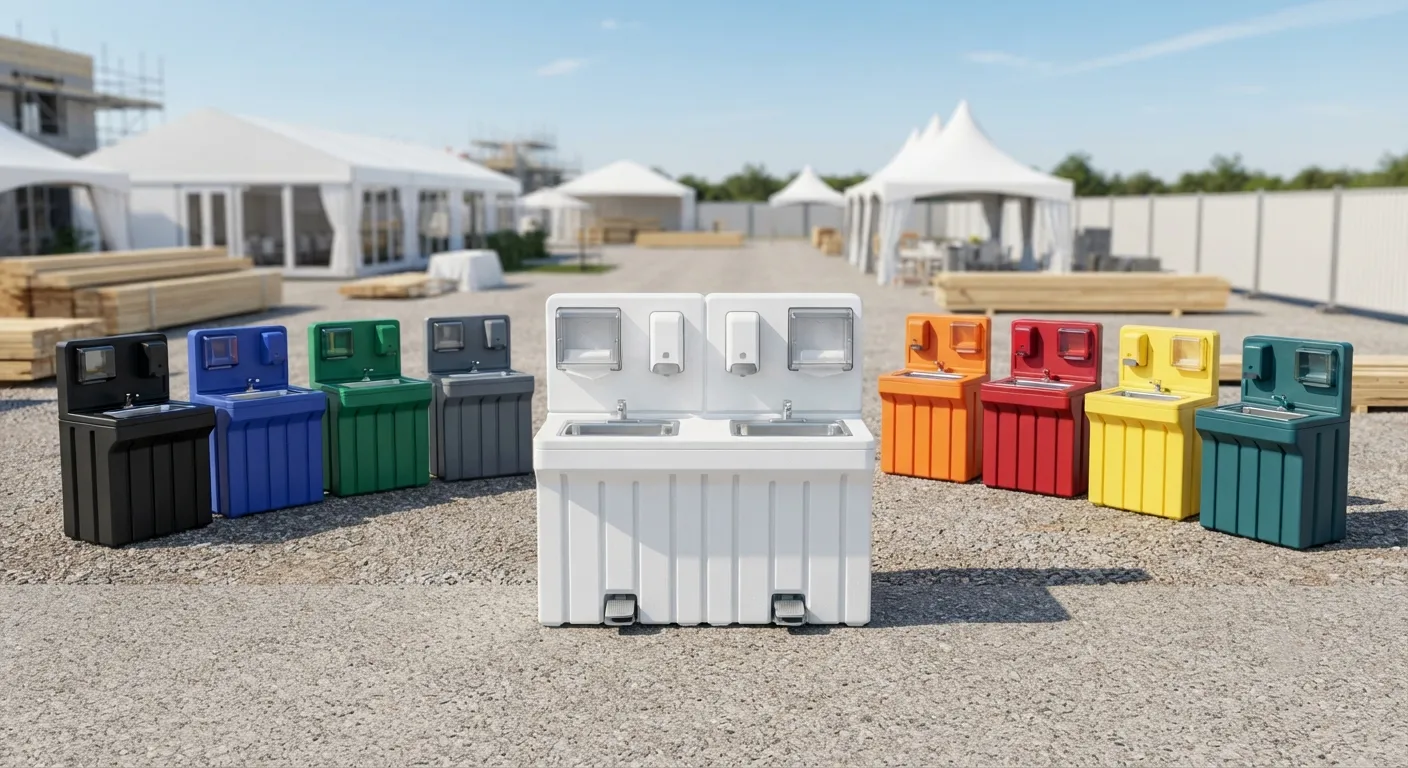
A portable sink rental or handwashing station runs on a sealed fresh water tank, usually foot-pumped or hand-cranked, that feeds a spigot over a small basin. Wastewater drains into a separate gray water tank underneath, so nothing hits the ground. Soap dispensers are built into most units, and that matters: 29 CFR 1910.141(d)(2) requires washing facilities to have soap and towels or a hand-drying device, since hand sanitizer alone doesn't satisfy that rule. On a construction site, OSHA 1926.51(a)(1) requires an adequate supply of potable water at all places of employment, which is exactly what these stations are built to cover. If your crew is spraying paint, coatings, herbicides, or insecticides, OSHA 1926.51(f)(1) specifically requires washing facilities for that contaminant exposure, not just general cleanup. A hand sanitizer station rental is a supplement to that, never a replacement. For site-specific requirements, the handwashing requirements page walks through what applies where.
Why Do Some Sites Need Septic or Camping Units Instead?
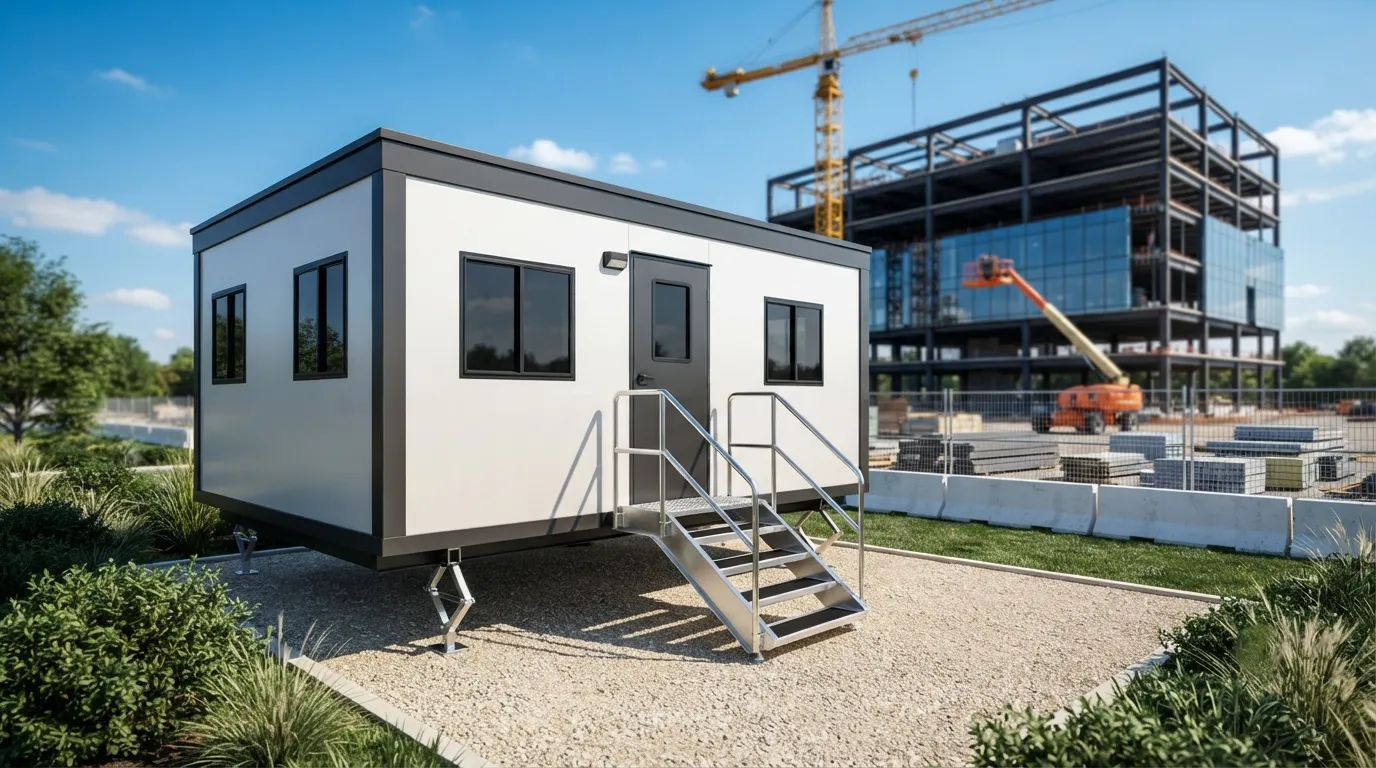
Not every job calls for a standalone unit. A property on a failing system needs septic pumping service instead, where a vacuum truck draws waste out of an underground tank rather than servicing a portable one. A typical residential septic tank gets pumped every 3 to 5 years depending on tank size and household load. Restaurants in Jersey City with a grease interceptor need it pumped once fats, oils, grease and solids reach 25 percent of the liquid depth, covered on the grease trap pumping page. People sometimes search for septic tank cleaning chemicals to stretch time between pumps, but chemical treatments don't replace scheduled pumping once a tank nears capacity. For remote sites without any bathroom access, a holding tank rental works like a large-scale version of the same idea. Campers asking how camping porta potties work are usually looking at a compact version of the same sealed-tank system, just sized down, which the camping porta potty page covers along with placement near sites north toward Secaucus, 6.2 miles away, or Kearny, 6.2 miles northwest.
How often does a porta potty get serviced?
Weekly is the baseline under the ANSI/PSAI Z4.3 standard for up to 10 users over a 40 hour week. High-traffic construction sites or multi-day events usually need two or three visits weekly. Jersey City Porta Pros builds the schedule around actual headcount, not a flat default.
Do porta potties need water or electricity?
No. Standard units run entirely on the holding tank and chemical deodorizer system, no hookup required. Flushable and deluxe models carry their own onboard fresh water tank instead of tapping into a line. That's what makes them work on raw job sites.
How many porta potties does a construction crew need?
OSHA 1926.51(c) sets ratios by crew size, starting at one toilet for 20 or fewer workers. Above that, ratios shift with headcount. The how many porta potties do I need guide runs the math against your crew size.
What chemicals go in a porta potty tank?
A blue deodorizing chemical breaks down waste and controls odor between service visits. It's added to the tank during setup and topped off at each cleaning. Searches for portable toilet chemicals near you usually mean this same holding-tank treatment.
Can a portable sink replace a permanent handwashing setup?
For temporary sites and events, yes. It meets 29 CFR 1910.141(d)(2) as long as soap and towels or a dryer are stocked, not just sanitizer. For a permanent facility, city plumbing code would apply instead of a portable unit.
Next step
Get a delivery date
Tell us the address, the dates and the headcount. We size the order and confirm the route.